Table of Contents
If you’ve been feeling unusually tired, moody, bloated, anxious, or stuck in a cycle of sudden cravings, it may not be “just stress” or “just age.” It could be Hormonal imbalance quietly building up in your body through habits you repeat every day—especially the ones on your plate.
Hormones are your body’s internal messaging system. They help regulate metabolism, mood, sleep, hunger, menstrual cycles, skin health, and energy. When this system is even slightly disrupted, the effects are often loud and confusing. That’s why Hormonal imbalance symptoms can look like a random mix of weight changes, poor sleep, acne, irregular periods, and constant fatigue.
Here’s the twist: while some causes are out of your control, many daily food patterns are fully within your reach. Let’s break down 4 wrong eating habits that can trigger Hormonal imbalance, and the smarter swaps that support real hormone harmony.
✨⚡️ If you’re a woman, postpartum, dealing with PCOS, thyroid issues, stress overload, or unexplained weight gain—this article is for you.
✅ Understanding Hormonal imbalance (and why it feels like your body is “not listening”)
Hormonal imbalance happens when your body produces too much or too little of one or more hormones. Even small shifts can create noticeable changes because hormones affect nearly every system.
Common Hormonal imbalance symptoms you should not ignore
You may notice:
- Low energy and constant fatigue 😴
- Mood swings, irritability, anxiety 😵💫
- Sugar cravings and binge urges 🍩
- Weight gain around the belly 🧍♀️
- Irregular periods and PMS flare-ups 🩸
- Hormonal acne or sudden breakouts 😬
- Poor sleep and nighttime wake-ups 🌙
- Hair thinning or excess hair growth 💇♀️
- Low libido and brain fog 🧠
In many cases, these Hormonal imbalance symptoms are connected to insulin, cortisol, thyroid hormones, and female reproductive hormones like estrogen and progesterone.
🍽️ The 4 wrong eating habits that can trigger Hormonal imbalance
🚫 Habit #1: Overeating (or undereating) — your hormones hate extremes
Your body needs consistent nourishment to keep hormones stable. When you overeat often, you can gain weight and trigger inflammation. When you undereat frequently, your body may go into stress mode.
Both can contribute to Hormonal imbalance, especially if your weight changes rapidly.
Why this leads to Hormonal imbalance symptoms
- Overeating raises insulin and can worsen insulin resistance
- Undereating increases stress hormones cortisol
- Fluctuating calories disturb reproductive hormones and thyroid function
- Appetite hormones like leptin and ghrelin become dysregulated
This is especially important for Hormonal imbalance in women, where even small weight shifts can impact fertility, menstrual regularity, and mood stability.
🔥 Weight gain and reproductive hormones
A pattern of overeating can push weight upward. That’s where weight gain hormonal imbalance becomes a real loop: weight changes influence hormones, and hormones influence hunger and cravings.
This is also a key risk factor for PCOS hormonal imbalance, where metabolic health, insulin, and reproductive hormones all collide.
✅ Smarter alternative: balanced consistency
Try eating at regular intervals with:
- Protein (eggs, fish, lentils)
- Fiber (vegetables, whole grains)
- Healthy fats (nuts, olive oil)
- Hydration + electrolytes
If you want a practical reset, check a guide like the Harvard Healthy Eating Plate for structure:
https://www.hsph.harvard.edu/nutritionsource/healthy-eating-plate/
📌 Internal link suggestion (embed on your website):
Read our complete guide on building a hormone-friendly meal routine for busy people.
🚫 Habit #2: Eating too much sugar (even if you “don’t eat sweets”)
Sugar doesn’t only come from desserts. It sneaks into packaged foods, flavored yogurts, juices, sauces, breakfast cereals, and “healthy” snack bars.
Over time, frequent sugar intake can trigger Hormonal imbalance by creating repeated blood sugar peaks and crashes.
How sugar triggers hormone chaos
- Causes blood sugar spikes
- Promotes insulin resistance
- Worsens cravings, fatigue, mood swings
- Can worsen inflammation and hormones imbalance
- Can impact reproductive hormones and worsen cycle irregularities
That’s why high sugar diet effects often show up as low energy, poor sleep, and stubborn weight gain—even if your calorie intake seems “normal.”
Sugar + skin: the hormonal acne connection
If you deal with acne flare-ups, sugar can worsen hormonal acne diet triggers. This is often linked to insulin, inflammation, and skin oil production.
✅ Smarter alternatives that still satisfy cravings
- Dark chocolate (70%+) 🍫
- Greek yogurt + berries 🫐
- Fruit + nuts 🍎
- Cinnamon-based snacks (helps cravings)
For science-backed guidance on added sugar, explore the American Heart Association recommendations:
https://www.heart.org/en/healthy-living/healthy-eating/eat-smart/sugar
📌 Internal link suggestion:
Explore our list of low-sugar snack swaps that support stable energy and cravings control.
🚫 Habit #3: Drinking diet soda and “zero-calorie” sweetened drinks
Diet soda feels like a win: no calories, no sugar, no guilt. But your hormones and gut bacteria may disagree.
Artificial sweeteners may interfere with gut health and hormones by shifting gut bacteria balance. This can affect hunger signals and insulin-related hormones.
Why this may increase Hormonal imbalance symptoms
- Disrupts leptin (satiety hormone) and ghrelin (hunger hormone)
- Can trigger cravings and overeating later
- May influence GLP-1 secretion, which affects insulin response
- Can worsen metabolic patterns linked to obesity and insulin resistance
If your goal is to improve Hormonal health, diet soda is one of the sneakiest habits to review.
✅ Smarter swap ideas that actually feel enjoyable
- Sparkling water + lemon 🍋
- Coconut water (watch sugar content) 🥥
- Mint-infused water 🌿
- Unsweetened iced herbal tea 🧊
For deeper gut-health evidence, you can explore this NIH-supported resource:
https://www.ncbi.nlm.nih.gov/
📌 Internal link suggestion:
See our gut-friendly beverage guide for better digestion, cravings, and stable energy.
🚫 Habit #4: Overdoing alcohol (especially on weekends)
A drink or two occasionally may not be harmful for everyone. But consistent heavy drinking can disturb multiple hormonal pathways.
Alcohol can interfere with endocrine signaling and contribute to Hormonal imbalance, especially affecting:
- estrogen imbalance
- cortisol regulation
- insulin function
- thyroid signaling
How alcohol affects women differently
In many cases, Hormonal imbalance in women is more sensitive to alcohol because estrogen metabolism and cycle hormones are more easily disrupted.
This can show up as:
- irregular periods hormonal imbalance
- PMS worsening
- disrupted sleep
- increased cravings and mood swings
✅ Better choices for hormone stability
If you drink:
- Prefer distilled spirits with zero-sugar mixers
- Avoid sugary cocktails
- Hydrate aggressively
- Eat protein before drinking
For alcohol health effects, refer to CDC guidance:
https://www.cdc.gov/alcohol/
📌 Internal link suggestion:
Read our beginner-friendly guide on mindful drinking without ruining sleep and energy.
🧠 Why your body reacts so strongly: the hormone systems involved
Hormonal imbalance isn’t “one hormone.” It’s a network issue.
Insulin and blood sugar spikes
If you’re eating sugar frequently, skipping meals, or relying on refined carbs, you create repeated blood sugar spikes and crashes. This pushes your insulin system harder—and increases insulin resistance risk.
This is a major driver behind:
- fatigue
- cravings
- belly weight gain
- brain fog
Cortisol imbalance and stress eating loops
When stress rises, your body increases cortisol. Add irregular eating and poor sleep, and cortisol imbalance becomes more likely.
This can worsen:
- anxiety
- cravings
- belly fat
- insomnia
That’s why a diet focused on lowering stress hormones cortisol is extremely helpful.
📌 Internal link suggestion:
Try our calming evening routine for better sleep and balanced appetite.
Estrogen imbalance and progesterone imbalance
Sex hormones matter for skin, periods, fertility, mood, and body composition. Diets high in sugar, alcohol, and ultra processed foods can contribute to estrogen imbalance and reduce progesterone stability.
These shifts often show up as:
- mood swings
- PMS
- acne
- cycle irregularity
Thyroid hormones and metabolism
If you feel cold, sluggish, and struggle with weight, your thyroid may be involved. Diet patterns that drive inflammation or nutrient deficiency may contribute to thyroid hormone imbalance.
This is why hypothyroidism diet awareness matters—especially if you have fatigue + weight gain patterns.
🥗 The hormone-friendly reset plan (simple but powerful)
You don’t need extreme detoxes. In fact, the hormone detox myth is often a distraction from what works: consistent, nutrient-dense habits.
The best hormone imbalance diet approach (easy to stick to)
A supportive hormone imbalance diet focuses on:
- protein at every meal
- fiber-rich carbohydrates
- healthy fats
- less added sugar
- fewer packaged foods
- stable eating timing
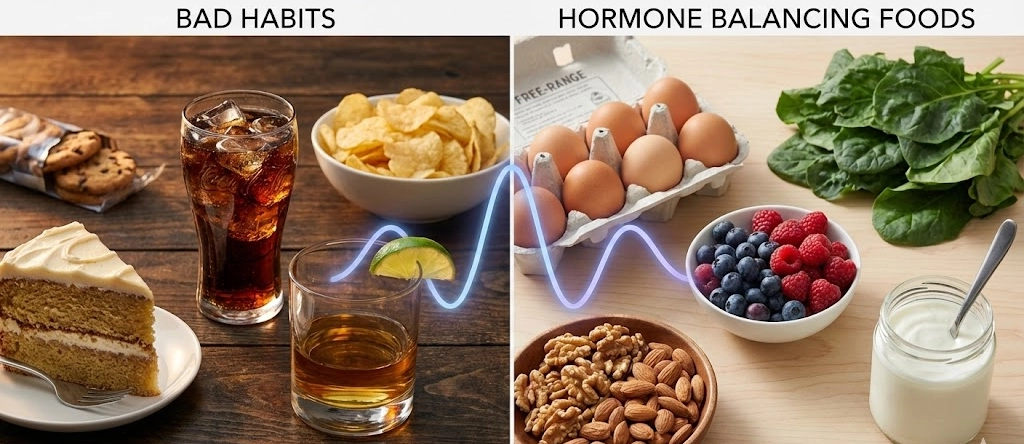
Worst foods for hormonal imbalance (minimize, don’t panic)
You don’t need perfection, but reduce frequency of:
- sugary drinks
- candy and pastries
- deep-fried fast foods
- flavored sweetened yogurts
- packaged snacks
- frequent alcohol
These fall under foods that cause hormonal imbalance because they trigger inflammation, insulin spikes, and gut issues.
Hormone balancing foods that actually help
Add more:
- eggs, fish, chicken, dals
- leafy greens and colorful vegetables
- nuts, seeds, olive oil
- berries, apples, citrus
- fermented foods (curd, kefir)
These are practical hormone balancing foods that support insulin control and gut balance.
A sample hormone balancing diet plan (simple day structure)
Breakfast:
Eggs + vegetables OR oats + nuts + Greek yogurt
Lunch:
Dal + rice/roti + vegetables + salad
Snack:
Fruit + nuts OR yogurt + seeds
Dinner:
Lean protein + veggies + healthy fat
(keep dinner lighter than lunch when possible)
This structure supports nutrition and hormones stability without forcing restrictive rules.
👩⚕️ Hormonal imbalance in women: why symptoms often show up faster
Women’s hormones shift with:
- menstrual cycle phases
- pregnancy and postpartum
- perimenopause and menopause
- PCOS patterns
- thyroid fluctuations
That’s why female hormone imbalance tends to show up with clear signs like period irregularity and acne. Tracking your cycle and linking food habits can reveal patterns quickly.
PCOS connection (food habits matter a lot)
If you suspect PCOS symptoms—like irregular cycles, acne, hair growth, weight gain—diet plays a major role.
Strong nutrition habits improve:
- insulin response
- inflammation
- cycle regularity
That’s why PCOS and diet is one of the most searched topics among women facing Hormonal imbalance symptoms.
🧩 Hidden habits that worsen Hormonal imbalance without you noticing
Skipping meals and long gaps
Skipping meals effects can include:
- intense cravings
- irritability
- overeating at night
- cortisol spikes
Late-night eating
Late night eating effects often include:
- poor sleep
- digestion issues
- insulin disturbances
Too many refined carbs
Refined carbs like white bread, biscuits, and packaged cereal can raise glucose quickly and worsen cravings cycles.
Too many ultra processed foods
Beyond sugar, ultra processed foods influence hormones through additives, low fiber, poor micronutrients, and gut disruption. Many processed food health effects connect to metabolic and mood changes.
🌙 Lifestyle changes that make your diet work better (Discover-friendly and realistic)
Food is powerful, but lifestyle decides whether food works.
Sleep and hunger hormones
If sleep is poor, ghrelin rises and leptin drops—meaning you feel hungrier and less satisfied.
That’s why sleep and hormone balance is foundational to preventing Hormonal imbalance.
Movement improves insulin sensitivity
Daily walking supports:
- lower glucose spikes
- improved insulin sensitivity
- better stress response
Stress regulation prevents cortisol dominance
Chronic stress keeps cortisol high, making fat loss harder and cravings worse.
This supports the real-world connection between inflammation and hormones, appetite hormones, and mood stability.
✅ Conclusion: Fix these 4 habits to reduce Hormonal imbalance naturally
If you’ve been battling fatigue, cravings, mood swings, acne, weight gain, or irregular cycles, it’s worth taking Hormonal imbalance seriously—because it often starts with daily choices that seem harmless.
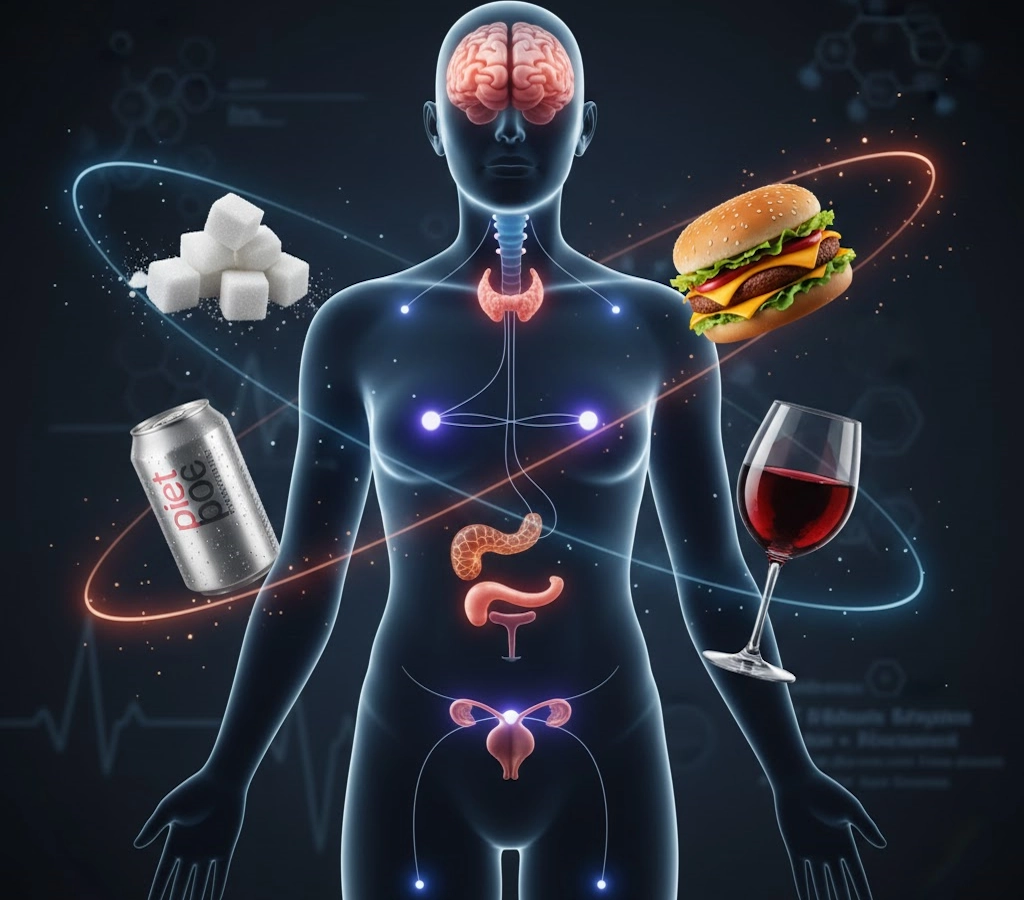
To recap, the 4 wrong eating habits that can trigger Hormonal imbalance are:
✅ overeating or undereating
✅ too much sugar (and hidden sugars)
✅ relying on diet soda/artificial sweeteners
✅ overdoing alcohol
The good news? Many Hormonal imbalance symptoms start improving when you stabilize blood sugar, reduce ultra-processed foods, support your gut, and build a balanced hormone imbalance diet.
Start small, stay consistent, and aim for a lifestyle you can repeat—not a “perfect” plan you quit in 7 days.
❓ FAQs — Hormonal imbalance + diet & symptoms
1) What are the most common Hormonal imbalance symptoms in daily life?
The most common Hormonal imbalance symptoms include fatigue, mood swings, sugar cravings, weight gain, hormonal acne, irregular periods, and poor sleep. These symptoms often happen together because hormones control metabolism, stress response, and reproductive cycles.
2) Can overeating cause Hormonal imbalance even if I eat healthy foods?
Yes. Overeating can contribute to Hormonal imbalance even when food quality is good. Too many calories may lead to weight gain, insulin changes, and inflammation, which can trigger appetite hormone disruption and worsen long-term hormonal regulation.
3) What are the biggest causes of hormonal imbalance linked to food habits?
Major causes of hormonal imbalance include frequent sugar intake, irregular eating patterns, alcohol overuse, and heavy reliance on processed foods. These habits create blood sugar swings, stress hormone changes, and gut disruption, leading to hormonal instability.
4) What are the clearest signs of hormonal imbalance in women?
Common signs of hormonal imbalance in women include irregular periods, PMS that feels extreme, hormonal acne, hair fall, weight gain around the midsection, low energy, and mood changes. Many cases also overlap with thyroid or PCOS patterns.
5) How to balance hormones naturally without medication?
To support Hormonal imbalance naturally, focus on stable meals, protein intake, fiber-rich foods, stress reduction, and better sleep. A consistent routine improves insulin regulation, supports estrogen metabolism, and reduces cortisol-driven cravings and fatigue over time.
6) What is the best hormone imbalance diet for beginners?
A beginner-friendly hormone imbalance diet includes protein at each meal, fewer added sugars, more vegetables, good fats, and consistent meal timing. It should also reduce ultra processed foods and help prevent frequent blood sugar spikes and crashes.
7) Which foods that cause hormonal imbalance should I reduce first?
The most common foods that cause hormonal imbalance are sugary drinks, desserts, fried fast food, refined carbs, and heavily processed snacks. These foods increase insulin resistance risk, worsen inflammation, and can trigger cravings and mood changes quickly.
8) Are diet sodas part of the worst foods for hormonal imbalance?
Diet soda is often considered among the worst foods for hormonal imbalance because artificial sweeteners may impact gut bacteria and hunger hormones. It can also increase sweet cravings and disrupt appetite signals, which may worsen overeating tendencies.
9) Can alcohol worsen estrogen imbalance and cycle problems?
Yes. Alcohol can worsen estrogen imbalance and disrupt hormone metabolism, especially in women. It may also contribute to irregular periods hormonal imbalance and sleep disturbance, which makes symptoms like cravings, fatigue, and anxiety more intense.
10) How does insulin resistance connect to Hormonal imbalance symptoms?
Insulin resistance contributes to Hormonal imbalance symptoms by increasing blood sugar instability, causing fatigue, cravings, and weight gain. It also affects reproductive hormones, making PCOS symptoms worse and increasing the risk of irregular cycles.
11) Can PCOS and diet improve hormonal symptoms naturally?
Yes. PCOS and diet are strongly connected because insulin and inflammation are major drivers of PCOS hormonal imbalance. Reducing sugar, increasing protein, choosing fiber-rich carbs, and avoiding ultra processed foods can improve cycle regularity and skin health.
12) What lifestyle changes to balance hormones work fastest?
The best lifestyle changes to balance hormones include consistent sleep, daily movement, better stress management, and steady meals. These habits reduce cortisol imbalance, stabilize hunger hormones, and improve gut health and hormones over a few weeks.